WAS GOING TO
past plan, often unfulfilled
I was going to call you, but I forgot.
great for excuses ENGLISHCUE
Until 30 November: try EnglishCue PRO for US$0.99 your first week, then US$19.90/month, cancel anytime. Try PRO · US$0.99 →
B2 English grammar lesson · Verb tenses · PRO · 60 min
I was going to call you, but I forgot. I knew you would love it. I was about to leave when the phone rang.
Sophie tells the story of her wedding day: “We were going to get married in the garden, but it started to rain. I was about to cry when my dad had an idea. I knew it would be a day to remember!” By the end of this lesson you can talk about the future as it was seen in the past.
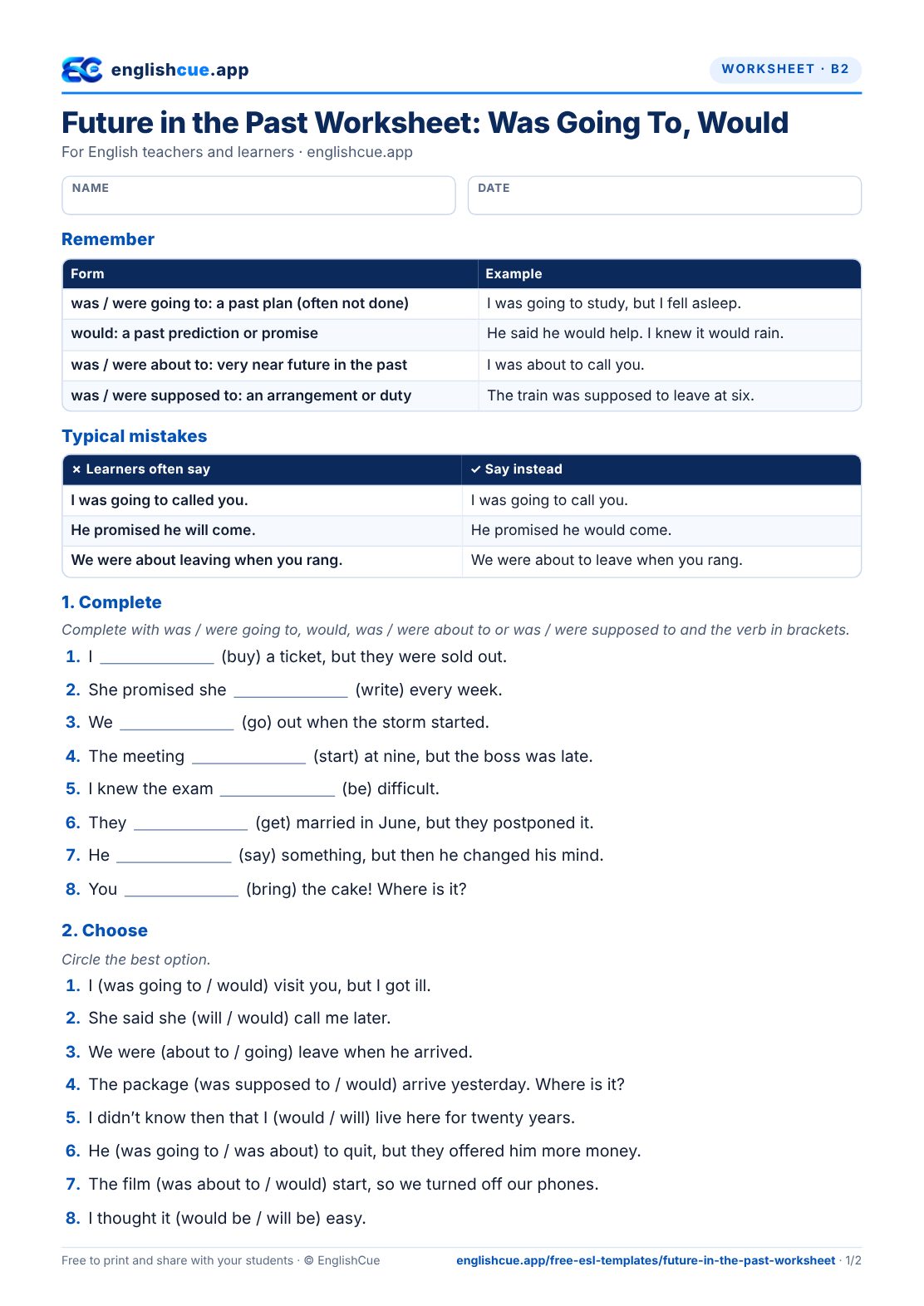 Worksheet · B2 · PDF with answersFuture in the Past Worksheet: Was Going To, Would
The forms your learner will use by the end of the lesson.
past plan, often unfulfilled
I was going to call you, but I forgot.
great for excusesprediction from the past · later in a story
I knew you would love it.
after thought / knew / saidvery soon in the past
I was about to leave when the phone rang.
+ base formformal: what happened later
He was to become president.
biographies| Form | Use | Example |
|---|---|---|
| was / were going to + base form | a past plan or intention (often it didn’t happen) | We were going to get married in the garden, but it rained. |
| would + base form | a prediction or expectation in the past | I knew it would be a day to remember. |
| was / were about to + base form | something that was going to happen very soon | I was about to cry when my dad had an idea. |
These forms are the past of going to, will and be about to. Very common in stories, excuses and reported speech.
The errors students make most often with this structure, and how to explain them.
The past continuous can also describe a past arrangement: “We were meeting at eight, but she cancelled.”
State and action verbs: think, have, see, be being.
Use them as a warm-up or an exit ticket. Answers are below.
Share your screen and teach: everything from the warm-up to the writing task is ready.