Used to: past habits and states
Subject + used to + base verb
I used to walk to school every morning.
Use used to to describe habits, routines, and states that were true or happened regularly in the past but are no longer true or no longer happen. ENGLISHCUE
Until 30 November: try EnglishCue PRO for US$0.99 your first week, then US$19.90/month, cancel anytime. Try PRO · US$0.99 →
B1 English grammar lesson · Verb tenses · Free · 60 min
Talk about past habits, old routines, and things that are different today.
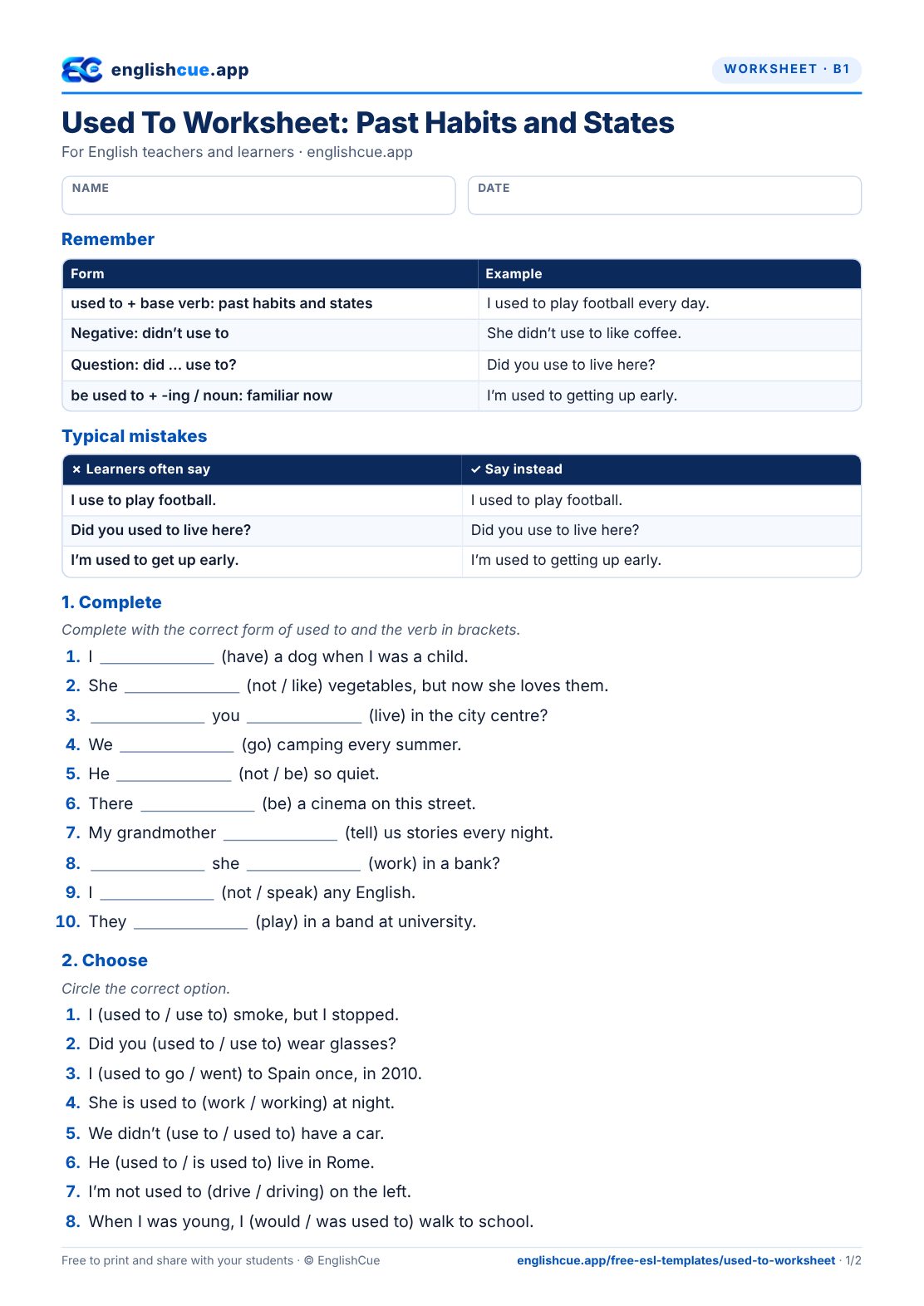 Worksheet · B1 · PDF with answersUsed To Worksheet: Past Habits and States
The forms your learner will use by the end of the lesson.
Subject + used to + base verb
I used to walk to school every morning.
Use used to to describe habits, routines, and states that were true or happened regularly in the past but are no longer true or no longer happen.Subject + didn't use to + base verb
I didn't use to like vegetables, but I eat them now.
Use didn't use to to describe habits or situations that were not true in the past but may be different now.Question: Did + subject + use to + base verb? Short answer: Yes, I did. / No, I didn't. Past simple: subject + past verb.
Did you use to play any sports at school?
Use Did ... use to...? to ask about someone's past habits or states. Use the past simple to talk about individual finished events or actions at a specific time.Used to can describe repeated actions and past states. It usually suggests a difference between the past and the present. After used to, use the base form of the verb, not the past form. Say used to live, not used to lived.
After didn't, use use to, without -d. Say I didn't use to drive, not I didn't used to drive. The negative describes a past situation or habit that may have changed.
Use did + use to in questions, not did + used to. Compare: Did you use to travel a lot? asks about a past habit. Did you travel last weekend? asks about one specific finished event.
Use them as a warm-up or an exit ticket. Answers are below.
Share your screen and teach: everything from the warm-up to the writing task is ready.