FORM
had + past participle
The film had started.
same for all persons ENGLISHCUE
Until 30 November: try EnglishCue PRO for US$0.99 your first week, then US$19.90/month, cancel anytime. Try PRO · US$0.99 →
B1 English grammar lesson · Verb tenses · PRO · 60 min
When we got to the church, the ceremony had already started.
Ollie tells his friend about his cousin’s wedding: “It was a disaster! When we got to the church, the ceremony had already started. I had left the present at home, and my wife had forgotten her shoes!” By the end of this lesson you can show which past action happened first.
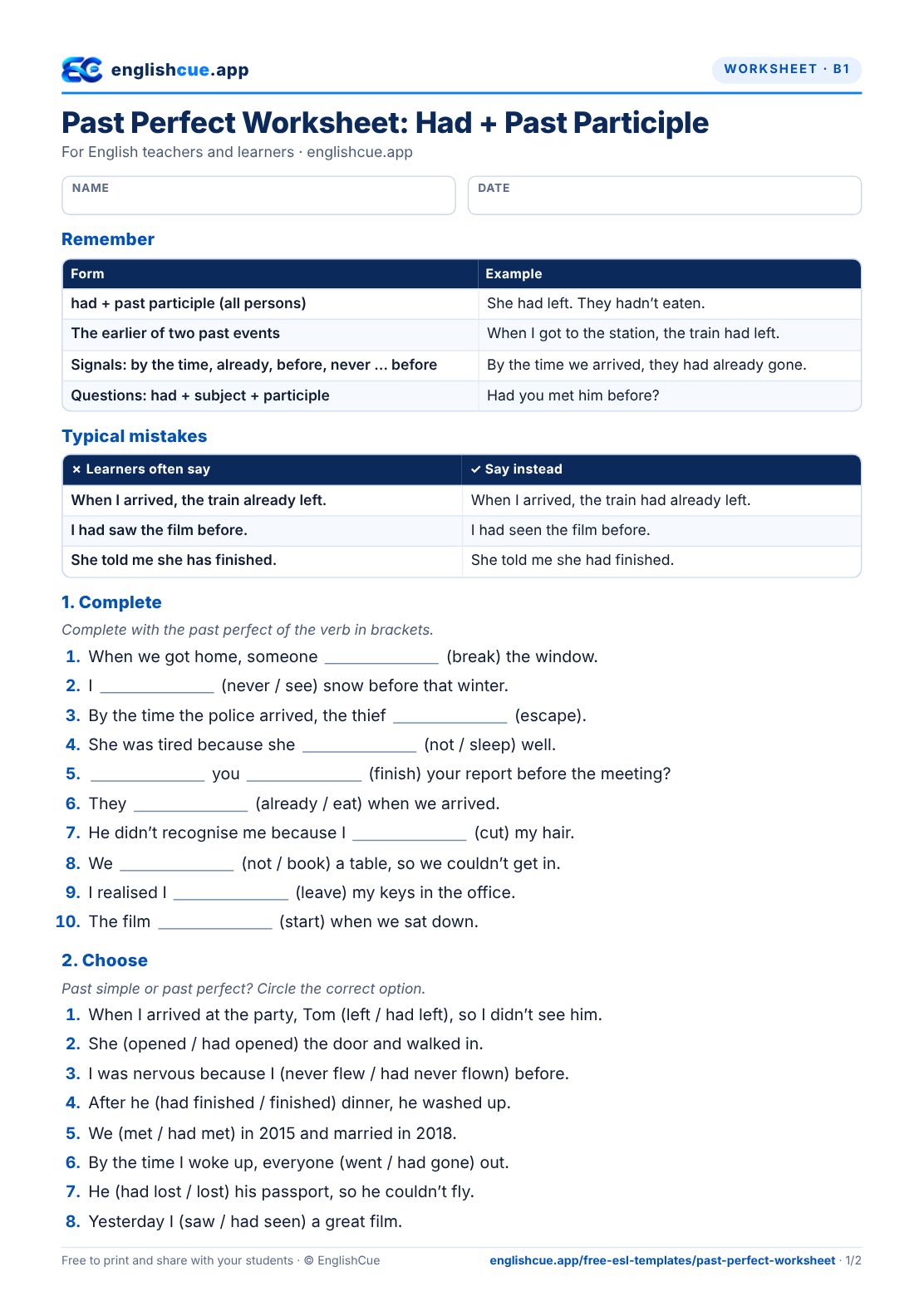 Worksheet · B1 · PDF with answersPast Perfect Worksheet: Had + Past Participle
The forms your learner will use by the end of the lesson.
had + past participle
The film had started.
same for all personspast perfect = earlier · past simple = later
When I arrived, the film had started.
meaning changesalready · just · never… before · by the time
By the time we arrived, they had left.
show the orderbecause + past perfect
She was angry because he had forgotten.
the cause came first| Positive | Negative | Question |
|---|---|---|
| I / she / they had left (’d left) | I hadn’t left | Had you left? |
had + past participle, the same for every person. In speech: I’d, she’d, they’d.
The errors students make most often with this structure, and how to explain them.
If the order is clear with before or after, the past simple is often fine: “I had dinner after I finished work.” Use the past perfect when the order is important or not obvious.
All the past tenses together: narrative tenses for telling a story.
Use them as a warm-up or an exit ticket. Answers are below.
Share your screen and teach: everything from the warm-up to the writing task is ready.